The Salvation of Cuba
By James Quillian, Economist, Political Analyst, Teacher of Natural Law
In natural law, I make it a habit to judge people and institutions by how they actually function, not by the labels they pin on themselves. A thing is what it does. That rule clears away a lot of fog.
The United States is defined as a republic. Officially it is, but it hasn’t functioned like one in a long time. The public gets a steady diet of surface‑level information, while anything meaningful or controversial is tucked out of sight. And truth be told, most citizens don’t seem eager to oversee their government anyway. Human beings have a long history of trading freedom for comfort. Once comfort settles in, the appetite for reform dries up.
Cuba sits on the opposite end of the same problem. Its economy is failing, and no amount of wishful thinking will change that. Nothing improves until free markets appear, and free markets cannot exist without at least a few democratic principles standing guard. Democracy and free markets can be corrupted—as we see in the United States—but in Cuba they are simply absent.
The irony is that Cubans could be better off almost overnight if even a sliver of free‑market behavior were allowed. The demand is there. The supply is not. Cuba is in a perfect position to satisfy consumer needs that go unmet.
Take automobiles. Cuban businesses—state‑run or otherwise—could build basic cars designed to be repaired, not discarded. Machines that last forever because they’re meant to. There’s a market for that everywhere.
Or smartphones. There is a huge demand for simple, functional devices that aren’t loaded with corporate clutter. Linux is free. A Cuban‑built phone that does the essentials well would sell faster than they could make them.
 In short, Cuba could manufacture the very items of high utility that are intentionally kept off the American market. The world is hungry for practical goods. Cuba could feed that hunger if it chose to.
But here’s the wall they keep hitting: corruption. All governments are corrupt to some degree—power does that—but Cuba’s leadership holds nearly total power over its citizens. When power approaches 100%, corruption follows right behind it. Absolute power still behaves the way it always has.
The United States is different only in form. Our free‑market system has been replaced with a rigged one. Political power has taken the place of price in determining who gets what. That’s not a free market. That’s a political marketplace wearing an economic mask.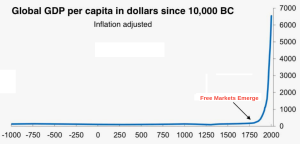
Cuba’s salvation is simple, though not easy: introduce free markets, even in small doses, and prosperity will follow. Free markets and democratic principles changed the world once. They can do it again—anywhere they’re allowed to breathe.